

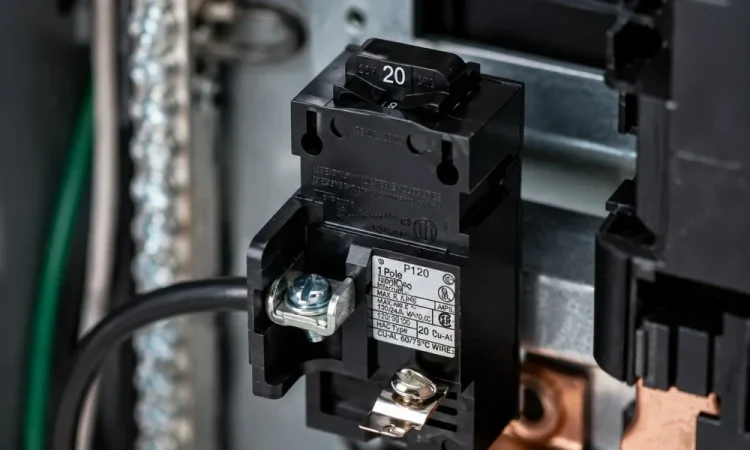
Open almost any electrical panel and the breakers look nearly identical: a row of switches with numbers printed on the handles. Behind that similar appearance are several types designed to guard against very different hazards. Choosing the right one for each circuit is part of keeping a building safe and up to code.
Today’s circuit breakers go well beyond basic overload protection, with options that detect shock hazards and the arcing that can lead to electrical fires. Understanding what each type does makes conversations with an electrician easier and helps owners plan upgrades. Here is how the main residential and light commercial breaker types compare.
Standard Thermal-Magnetic Breakers
Standard breakers protect wiring from overloads and short circuits. A thermal element responds to sustained overcurrent, while a magnetic element reacts almost instantly to large fault currents. They remain the foundation of most panels and are used on circuits where code does not call for additional protection.
GFCI Breakers
Ground fault circuit interrupter breakers compare the current going out on the hot conductor with the current returning on the neutral. If a small difference appears, meaning current may be flowing through a person or water, the breaker trips quickly.
- Typical locations: Bathrooms, kitchens, garages, laundry areas, outdoor circuits, and other damp or wet spaces.
- Main benefit: Protects people from electric shock.
- Alternative: GFCI protection can also be provided by GFCI receptacles at the outlet.
AFCI Breakers
Arc fault circuit interrupter breakers watch for the electrical signatures of dangerous arcing, which can happen when wires are damaged, pinched, or loosely connected. Arcing can generate enough heat to ignite nearby materials.
- Typical locations: Bedrooms, living areas, and many other habitable rooms in homes.
- Main benefit: Reduces the risk of electrical fires.
Dual Function Breakers
Dual function breakers combine GFCI and AFCI protection in one device. They are useful for circuits that need both, such as kitchens and laundry rooms in many jurisdictions, and they save panel space compared with installing separate protection.
How to Decide Which Type a Circuit Needs
- Identify the room or area the circuit serves.
- Check the electrical code adopted in your jurisdiction for that location.
- Consider the loads on the circuit, such as motors or electronics.
- Confirm the breaker is compatible with the panel brand and model.
- Match the amperage rating to the wire size and circuit design.
Requirements come largely from the National Electrical Code, but local jurisdictions adopt different editions and amendments, so local rules always take priority.
Compatibility Matters
Breakers are listed for use in specific panels. Installing a breaker that is not approved for a panel can lead to poor connections, overheating, and voided listings. Always check the panel label or manufacturer guidance before selecting a replacement.
Testing Protective Breakers
GFCI, AFCI, and dual function breakers include a test button. Pressing it periodically confirms the protective circuitry is working. If a breaker does not trip when tested, it should be checked and replaced by a qualified electrician.
Common Mistakes to Avoid
- Using one type everywhere: Different areas face different hazards and code requirements.
- Mixing brands without checking listings: A breaker that fits physically may not be approved for that panel.
- Ignoring nuisance tripping: Frequent trips on a protective breaker can point to wiring or appliance issues worth investigating.
Replacing or adding breakers involves working inside a live panel. This work should be done by a licensed electrician following local code and utility requirements.
Protection Matched to Every Circuit
Choosing breakers by hazard rather than by habit gives each circuit the protection it needs. With the right mix of standard, GFCI, AFCI, and dual function devices, a panel guards against overloads, shocks, and fires at the same time.