
UV Printer vs. UV DTF vs. DTF vs. DTG: Which Printing Method Is Best for a Small Business?

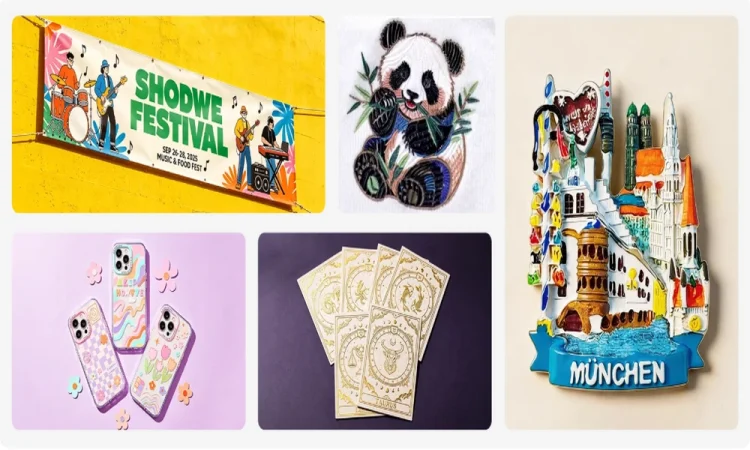
Choosing the right printing technology can be challenging for a small business. UV, DTF, DTG and UV DTF each offer different advantages, and the best option depends on what you want to print, the materials you use, your production volume, and the types of products you plan to sell.
For creators, Etsy sellers, and customization businesses, a UV printer can be particularly attractive because it can support direct printing on a wide range of rigid materials. UV DTF expands customization to curved and irregular surfaces, while DTF and DTG are primarily focused on textile applications.
LONGER ePrint takes this versatility a step further by combining UV printing, UV DTF, DTF, and DTG capabilities in one desktop platform. With dual-head technology, up to 15 mm 3D Color Relief, up to 1440 DPI resolution, and 10 mm high-gap printing, ePrint is designed to give small businesses more ways to create and sell customized products.
UV Printer vs. UV DTF vs. DTF vs. DTG at a Glance
Before choosing a printing method, it helps to understand the primary differences.
| Printing Method | Best For | Main Materials | Key Advantage | Main Limitation |
|---|---|---|---|---|
| UV Printing | Rigid products and direct-to-object customization | Acrylic, wood, glass, metal, leather, ceramics, etc. | Direct printing and specialty effects | Not primarily designed for conventional apparel printing |
| DTF | Custom apparel and textiles | Cotton, polyester, blends, and other compatible fabrics | Versatile garment transfers | Requires heat-transfer process |
| DTG | Direct garment printing | Primarily cotton and compatible textiles | Direct-to-garment full-color printing | Best suited to compatible garments |
| UV DTF | Curved, irregular, and difficult-to-print surfaces | Glass, plastic, metal, ceramics, tumblers, gifts, etc. | Flexible transfer application | Requires transfer-film workflow |
For a UV printer for small business, the key question is not necessarily which technology is the best overall. Instead, consider which printing method matches your products and business model.
What Is UV Printing?
UV printing is a digital printing process that uses UV-curable ink. The ink is printed onto a substrate and cured using UV light. Unlike conventional textile printing methods, UV printing can be used directly on many rigid and flat materials. One of the biggest advantages of UV printing is the ability to create detailed graphics while also using white ink, varnish, and raised effects.
Why Choose UV Printing?
UV printing can be particularly attractive for businesses that want to sell customized products rather than only apparel. With a Desktop UV Printer such as LONGER ePrint, creators can produce personalized products in a relatively compact workspace while maintaining access to professional printing features.
What Is DTF Printing?
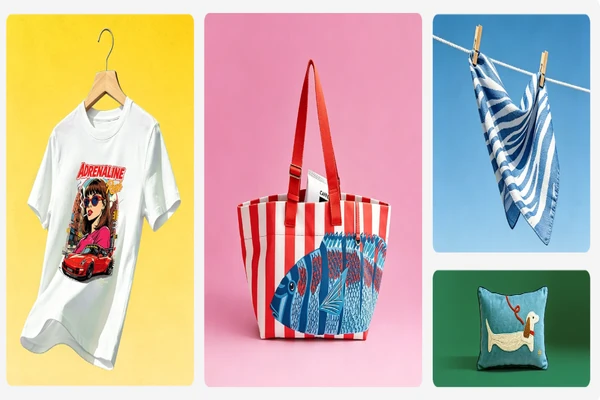
DTF stands for Direct-to-Film. The design is printed onto a transfer film using textile inks, coated with adhesive powder, and then transferred onto fabric using heat.
DTF is commonly used for:
• T-shirts
• Hoodies
• Sweatshirts
• Tote bags
• Sportswear
• Custom apparel
• Promotional clothing
DTF can work with a wide range of fabrics, making it a popular choice for apparel businesses.
What Is DTG Printing?
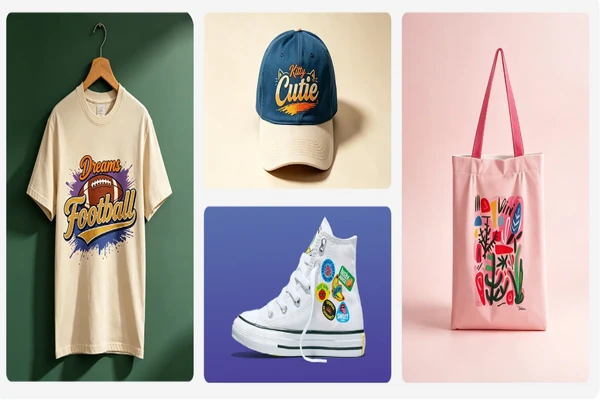
DTG stands for Direct-to-Garment. Unlike DTF, which prints onto film first, DTG prints directly onto a compatible garment.
The process is generally: Garment → Pretreatment → Direct Inkjet Printing → Heat Curing
DTG is particularly suitable for detailed full-color designs on compatible garments, especially cotton-based apparel.
DTG can be a good option for businesses that primarily sell:
• Custom T-shirts
• Personalized clothing
• Artistic apparel
• Small-batch fashion products
• Custom merchandise
However, DTG is more specialized toward garment printing than UV printing.
What Is UV DTF Printing?
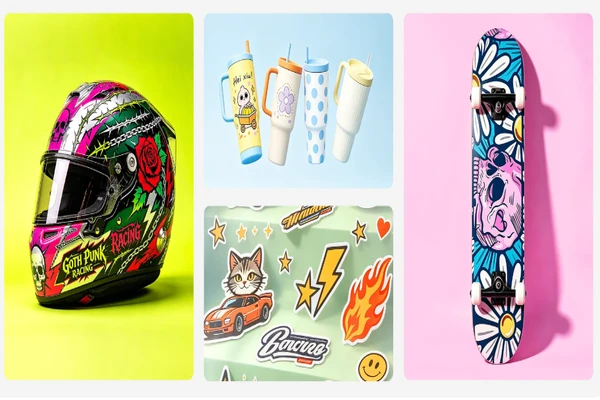
UV DTF printing uses a transfer-film process. Instead of printing directly onto the final product, the design is printed onto a specialized film and then transferred onto the target surface.
This makes UV DTF particularly useful for objects that are:
• Curved
• Irregularly shaped
• Difficult to position under a flatbed printer
• Too small or awkward for direct printing
A UV DTF Printer can therefore complement a UV Flatbed Printer by expanding the range of products that can be customized.
UV DTF vs. Direct UV Printing
The main difference is the application process.
Direct UV Printing: Printer → Product
UV DTF: Printer → Transfer Film → Product
Direct UV printing is often preferred when the product can be positioned directly on the printer bed. UV DTF can be more convenient when transferring designs onto curved or irregular surfaces. For small businesses, having access to both methods can provide greater product flexibility.
DTF vs. UV DTF
Although the names are similar, DTF and UV DTF serve different purposes.
DTF: Primarily for textiles and apparel.
UV DTF: Primarily for hard and non-textile surfaces.
This distinction is important when choosing a printing machine for a small business.
UV Printer vs. UV DTF: Which Is Better?
The answer depends on the type of product you want to customize.
Choose direct UV printing if you primarily work with:
• Flat acrylic
• Wood
• Metal
• Glass
• Signs
• Plaques
• Packaging
• Other compatible rigid products
Choose UV DTF if you frequently customize:
• Tumblers
• Bottles
• Curved containers
• Irregular objects
• Promotional products
• Small gifts
For businesses selling a broad range of personalized products, having access to both workflows can be advantageous.
UV Printer vs. DTF: Which Is Better?
The biggest difference is the type of material being printed.
A UV printer is primarily suited to rigid and non-textile products, while DTF is primarily designed for textiles. If your business focuses on T-shirts and apparel, DTF may be the more appropriate technology. If you want to sell customized gifts, signs, décor, promotional items, and rigid products, a UV printer may offer greater flexibility. This is why identifying your target product category should be the first step when selecting a UV Printing Machine.
UV Printer vs. DTG: Which Is Better?
The same principle applies when comparing UV printing with DTG. DTG is specialized for direct garment printing, while UV printing can cover a broader range of rigid products.
For example:
| Business Product | Recommended Technology |
|---|---|
| Custom T-shirts | DTF / DTG |
| Acrylic signs | UV |
| Wooden gifts | UV |
| Personalized tumblers | UV DTF |
| Glass products | UV / UV DTF |
| Custom hoodies | DTF / DTG |
| Metal plaques | UV |
| Personalized packaging | UV |
| Curved promotional products | UV DTF |
If your business sells products across several categories, a multi-application machine can be more practical than purchasing separate equipment for each printing method.
Which Printing Method Is Best for a Small Business?
There is no single best technology for every business.
Choose UV Printing If:
• You primarily sell rigid products
• You want direct-to-object printing
• You want raised textures or varnish effects
• You sell personalized gifts and décor
• You want to print on a variety of compatible materials
Choose UV DTF If:
• You sell curved or irregular products
• You customize tumblers or bottles
• You need flexible transfer applications
• Direct printing is difficult on certain products
Choose DTF If:
• Your primary products are T-shirts and apparel
• You need flexible textile transfers
• You want to customize different types of garments
Choose DTG If:
• You primarily print directly onto garments
• You focus on detailed full-color apparel
• You mainly work with compatible cotton-based products
Choose a Multi-Application Machine If:
• You want to sell both rigid products and apparel
• You want to experiment with different product categories
• You want to maximize the use of one machine
• You expect your business to expand
• You prefer not to purchase multiple specialized machines
Why ePrint Can Be a Strong Choice for a Small Business
LONGER ePrint is designed for businesses that do not want to limit themselves to one product category.Its combination of UV, DTF, DTG and UV DTF capabilities provides multiple paths for product development.
• Dual-head architecture
• 12 ink channels
• Up to 15 mm 3D Color Relief
• Up to 1440 DPI resolution
• 10 mm high-gap printing
• Desktop-sized design
• Multiple printing workflows
This makes it suitable for creators who want to start with a focused product line and expand over time.
How to Choose the Right Printing Technology
Before purchasing a UV Printing Machine or another printing system, ask yourself five questions:
What products do you want to sell?
Identify whether your business will focus on rigid products, apparel, curved objects, or a combination.
What materials will you use?
Different printing technologies are optimized for different materials.
How much space do you have?
A Desktop UV Printer or Small UV Printer may be more suitable for a home studio or small workshop.
How much do you expect to produce?
Higher order volumes make production efficiency increasingly important.
Do you plan to expand?
If you expect to add new product categories, a multi-application platform may provide more long-term flexibility.
Final Thoughts
UV, DTF, DTG and UV DTF each have their own strengths.
A UV printer is particularly suitable for direct printing on compatible rigid products.DTF and DTG are primarily focused on apparel and textile customization. A UV DTF Printer provides greater flexibility for curved and irregular surfaces. For a small business, however, choosing only one printing method can limit future product opportunities.
LONGER ePrint takes a broader approach by combining UV, DTF, DTG and UV DTF in one Desktop UV Printer. Its dual-head architecture, 12 ink channels, up to 15 mm 3D Color Relief, 1440 DPI resolution, and 10 mm high-gap printing provide creators with more ways to develop personalized products.
For businesses looking for a versatile UV printer for small business, ePrint can serve as more than a basic UV Flatbed Printer. It provides a flexible platform for testing new products, expanding into different applications, and building a more diversified customization business.